This is a guest post by Megan Saxelby
I think Amy Poehler’s podcast Good Hang is one of the best things going. And this week was a real gift because her guest was the gift of a human that is Nick Offerman. They spend a little time talking about his book for kids, Little Woodchucks: Offerman Woodshop’s Guide to Tools and Tomfoolery. Offerman shares how he thinks making things, whether it’s dinner, canoes, or slapsticks, is a great way to spend good time together that does not involve screens. To everyone’s delight, there is a portion where he sings a song while playing a Ukelele he made, and one of the verses goes:
“Everywhere I go, people staring at a phone. Sitting in a crowded room completely alone. It gives me more willies than the Twilight Zone. Our brains are hooked on that shit like a dog on a bone. Put down your gadget and look me in the eye…”
I had been trying to decide if I was going to write about tech this week, and I am taking Offerman’s song as my sign from the universe that the answer is, yes.
Please Wave at My Kid
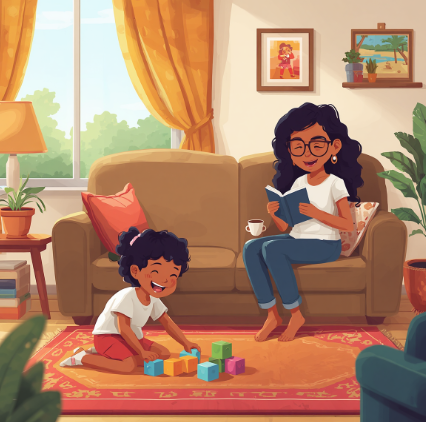
This past Saturday I was walking my 2 year old to our quaint downtown to get a coffee and play in the park while my husband took our other kiddo to her belt test for Taekwondo. We only have 1 car, so off in the stroller we went. We listened to the birds and talked to each other while she was also trying to engage in her other favorite activity, waving at strangers. And every single person we walked past ignored her because they were looking at a phone. Every one. And each time they’d pass without acknowledging her, Sammy let out a little, disappointed, “Aww.”

Now listen, I think my kid is really cute and that you should want to wave at her, but I get that not everyone loves to wave at little kids like I do. Did it fill me with brief bouts of rage because my kid was being ignored and thus disappointed? Sure. But it also filled me with this deeper, complicated mix of longing, dread, sadness, and nostalgia.
We kept walking to the coffee shop where she, again, tried to wave at and engage strangers. Again, everyone was on their phones. I turned her stroller to face me and we had a good chat about bellybuttons while we waited for our drinks. We dawdled around watching the chipmunks, pointing out birds, wishing for the train to come by, and eventually made our way to the playground. We immediately jumped into our favorite game, which is where she hides in a tunnel with little holes on the sides and I stick my hands in making weird noises, pretending to be a monster. All of a sudden, all the other kids who were at the playground, who were not my children, were also clamoring to get into the tunnel and be attacked by the imaginary monster. I played my part loud and well, while glancing around for the other parents. Again, most of them lost in their phones.
Sometimes I Wish I Were Dumber
I often tell my therapist that sometimes I wish I was dumber, that I didn’t pay attention to so much, because I think it would make life a lot easier. And Saturday was no exception, because as we walked home and I listened to Sammy pretend to make bird calls, I felt a growing mix of frustration and sadness. It just made me so aware of the social message she is getting as a toddler, that phones are really important.
Now before you think I am going to rant about having a screen-free household, that is very much not true. Hell, part of my business is making content for social media. Our kids watch plenty of TV and can quote Bluey. I am not coming at this from the lens of someone who is anti-screens.
I am coming at this from someone who has built a career around dignity, leading with the idea that everyone wants to matter, especially kids.
There’s actually a name for what was happening at that playground. Researcher Brandon McDaniel coined the term “technoference” back in 2015, and it means exactly what it sounds like: the way our devices interrupt and interfere with the people right in front of us. His research found that parents of infants spent about 27% of their time around their baby also on their phone. Objectively measured, not self-reported. Which matters because when we self-report, we almost always lowball it. And it’s not neutral. When McDaniel studied parent technoference and child behavior, he found that the kids of more distracted parents showed higher rates of both internalizing problems — think anxiety and withdrawal — and externalizing ones — think hyperactivity and acting out. Not because the parents were bad, but because the interruptions added up.
What gets me about this research is that it’s not measuring catastrophic neglect. It’s measuring the ordinary, constant, totally relatable thing of being half-present. The quick phone check while your kid is talking. The scroll while they’re playing nearby. The “mm-hmm” while your eyes are somewhere else. That’s the thing that’s accumulating.
There’s a Reason for All the 90s Nostalgia
Here’s the part that should stop us cold. The kids who grew up watching us do this, the ones whos screen time we obsess about, they are now nostalgic for a time before they had phones. Not the 90s specifically, because they weren’t there. But the feeling of the 90s. A 19-year-old named Nancy, in a recent interview, said it directly: “I am nostalgic for a time when I was present, when my generation was between 5 and 10, when we were still doing things in the real world. I don’t remember what I watched yesterday on TikTok, but I remember what I did years ago when I didn’t have a phone.”
That’s not a kid who needs more screen time rules. That’s a kid who is grieving something. And what she’s grieving is presence. Her own, yes. But also, I’d argue, the presence of the adults around her when she was small.
Research has found that 60% of Gen Z adults wish they could return to a time before everyone was “plugged in.” They weren’t alive then. They are nostalgic for a feeling they’ve pieced together from old photos and movies and the brief windows of their own early childhood before the phone became the center of every room. Nostalgia expert Clay Routledge writes that Gen Z is specifically captivated by what life was like in the analog past and seems to be mining it to foster a greater appreciation for offline living.
They are trying to find their way back to something. And I think, if we’re honest, the thing they’re trying to find their way back to is us. A version of us that was looking at them.
I Have Beef with Jonathan Hadit
And meanwhile, your adolescent is drowning in adults who are very, very publicly worried about them.
Jonathan Haidt has sold over two million copies of The Anxious Generation. He’s had meetings with Macron. He had lunch with the UK’s chief scientific adviser to the Department for Education. Parents are obsessed with the book, though I would bet the number of adults who read the book is far less than the ones of watched a summary of it on social media. The whole thing has become a kind of cultural moment, this collective adult freakout about kids and phones, and it’s everywhere. School phone bans. State legislation. Op-eds. Podcasts. Parents forwarding each other Atlantic articles at 11pm.
I am not here to litigate Haidt, though I am not a huge fan. Plenty of his critics think he’s overstating the evidence. Lots of his supporters think he’s saving a generation. That debate is genuinely complicated and worth having. But here’s the thing nobody in that debate seems to want to say out loud: We are having a massive, high-profile, totally visible public conversation about what our kids are doing with their phones, while on our phones.
There is something almost poetic about it. We are posting about screen addiction. We are doomscrolling articles about doomscrolling. We are scheduling family phone-free dinners and then checking our email on the way to the table. And our kids, who are watching us with the relentless attention of people who are still figuring out how the world works, are filing all of it away.
The phone ban conversation is not wrong. But it is incomplete. Because you can lock every phone in a Yondr pouch from 8am to 3pm and it will not undo what kids absorb in the hours they spend watching the adults they love most decide, over and over again, that whatever is on that screen is more important than what’s right in front of them. Rules tell kids what to do. Modeling tells them who to be.
To Be Clear, I Blame Capitalism
Before we go any further, I need to say something clearly: I am not blaming you.
I mean that. Not in the way people mean it when they’re about to blame you anyway. I mean it because I live this too. After school pickup, when I need 45 minutes to make dinner and decompress from my own day, my kids watch TV. Not educational content. Not carefully curated screen time. Whatever keeps them occupied so I can stand in my kitchen and think one complete thought. That’s real, and I’m not apologizing for it.
We are working full time and paying what feels like a second mortgage on childcare. We are watching the news and trying to figure out if democracy is going to be okay. We are getting Slack messages at 9pm and emails at 6am and somewhere in between we are supposed to be present, regulated, screen-free parents who model healthy digital habits. The mental load alone is enough to make a person want to lie face down on the floor. And sometimes we do. Phones out.
This is not a willpower problem. It is a structural one. The same technology industry that has your kid by the attention span has you too, and they designed it that way. You are not weak for finding it hard to put your phone down. You are a human being who is exhausted and overstimulated and living inside an economy that has been very clear about the fact that your rest is not its problem.
So when I talk about what we’re modeling, I am not pointing a finger. I’m pointing at a pattern. A collective one that none of us opted into exactly, but all of us are participating in. The goal isn’t guilt. Guilt is useless here, and honestly we’re all already carrying too much of it.
The goal is just to zoom out before we zoom in on our kids. To ask, before we set the next rule or have the next conversation about screen time, what have our habits already taught them? What have they been watching us do since they were small enough to wave at strangers from a stroller?
Because that’s the curriculum they’ve already absorbed. And the good news, the only news worth focusing on, is that we can change the lesson. Not by being perfect. By being a little more intentional than yesterday. So here’s where I always land, after all of it. After the research and the op-eds and the very serious conversations about what screens are doing to our kids. After the guilt and the overwhelm and the honest admission that yes, I also use Bluey as a kitchen assistant. Start with something dumb.
I mean it. Not a family media agreement. Not a phone-free dinner with a conversation jar. Not a structured unplugged weekend that everyone resents by Saturday afternoon. Start with something so low-stakes and silly that nobody, including you, has to perform anything.
Do a bad accent for no reason. Buy the fart machine. Challenge your kid to a staring contest while you’re waiting for food. Text them an unhinged meme from across the couch and watch them look up from their phone to make a face at you. The bar is genuinely that low.
Because here’s what I know from years of working with families and also just from being a person: connection is the whole thing. It is not the nice bonus you get to after you’ve handled the hard stuff. It is the hard stuff. A kid who feels genuinely connected to you, who knows that you find them interesting and funny and worth looking at, that kid is more immune to the pull of screens. They have a reason to look up because other people they love are looking at them.
For the next two weeks, treat your phone like a landline. Put it down somewhere and get up to check it if you have to look at it. Stop carrying it around like a digital pacifier.

The technoference research, the nostalgia data, the Haidt discourse, all of it is pointing at the same thing underneath. Our kids are hungry for presence. Theirs, yes. But ours first. And the fastest, cheapest, least exhausting way to offer that is not a rule. It’s a moment. A ridiculous, unmemorable, totally ordinary moment where you are just there, being a little weird, making them feel like the most interesting thing in the room.
Which, for the record, they are. I taught middle school for 15 years and I can tell you firsthand, they are some of the most magical humans on the planet.
You don’t have to rewire your whole family’s relationship with technology today. You just have to be slightly more fun than your phone. And some days that’s a high bar. But most days? Most days you can clear it.
XO,
Meg
If you want to think through what this actually looks like in your family, not the theory but the real Tuesday evening version of it, that’s exactly what we do in coaching. Come find me.

More Amazing from Megan
Megan Saxelby is a parenting coach, and founder of Wild Feelings. She is truly the world’s most optimistic sidekick, and helps parents of tweens and teens navigate this time when they feel like they’re out of their depth. She did 2 AMAZING interviews with the Screen Less Play More podcast that you can hear here!
Making It Happen IRL 💖 💫
20 Conversation Starters to Encourage Digital Wellbeing!
Some Pro Tips!
- These work best when you’re genuinely curious about their answers, not when you’re setting them up for a lecture. Teens can smell an agenda from three zip codes away.
- Start these conversations when you’re both doing something else like driving, cooking, walking. Direct eye contact makes teens feel like they’re being interrogated, but side-by-side conversations feel safer for deeper thoughts.
- Ask these questions when you’re genuinely struggling with the same thing. Nothing kills a conversation faster than a teen sensing you think you have it all figured out. Lead with your own confusion: “I can’t figure out why I keep opening Instagram when I’m stressed – do you do stuff like that too?”
- Don’t try to “fix” whatever they share. If they tell you something concerning about their digital habits, resist the urge to immediately offer solutions or restrictions. Your job is to be curious and help them think it through, not to become the tech police the moment they open up.
- “Do you think there’s a difference between being bored and needing to check your phone?”
- “I realized I check my phone when I’m stressed. What feelings make you want to scroll?”
- “If your phone could talk, what do you think it would say you’re trying to avoid?”
- “What’s the longest you’ve gone without checking your phone recently? How did that feel?”
- “Do you think the stuff you see online affects what you think is ‘normal’?”
- “I’ve noticed I get sucked into drama in comment sections. Do you ever feel like you’re watching your own life instead of living it?”
- “What’s something you do online that you wouldn’t do in real life?”
- “Do you think your online self is the same as your real self?”
- “If you had to explain to an alien how social media works, what would you say its actual purpose is?”
- “I’m trying to be more honest about when I’m on my phone to avoid dealing with something. Do you ever notice yourself doing that?”
- “I noticed I felt weird after scrolling for a while yesterday. Do you ever notice your mood change when you’re on your phone?”
- “What’s the difference between how you feel after watching TikTok versus texting with friends?”
- “I’m trying to figure out why I keep buying stuff I see in ads. Have you ever bought something because of social media and then regretted it?”
- “Do you think the algorithm knows you better than you know yourself sometimes?”
- “What do you think your phone thinks you’re interested in based on what it shows you?”
- “I deleted Instagram for a week and honestly felt less anxious. What app do you think you’d miss most if it disappeared?”
- “When you post something, what are you hoping will happen? Like, what’s the best-case scenario in your head?”
- “Do you ever catch yourself comparing your real life to what you see online?”
- “I’ve been thinking about how my feed makes me feel bad about our house. Does your feed ever make you feel weird about anything in your life?”
- “What’s something you’ve seen online that you later found out wasn’t true?”

Thanks for reading!! Tune in to the Screen Less Play More podcast for even more resources about parenting balanced, thriving kids in the digital age!!