
Chances are, your children are engaging in technology and screens for hours every day at school. Unfortunately, this isn’t making them any smarter.
As the technology of the world has changed rapidly in the past decades, so has the use of technology in classrooms. We went from chalkboards and computer labs in the 1980s, to a Chromebook on every desk, a Promethean screen in every classroom, and a smartphone in every pocket. When the internet began, it seemed that education was improving and that children would become smarter than ever before.
Unfortunately, the opposite has occurred.
The Dangers of EdTech
While it first appeared that personalized learning apps, algorithms, and educational games would yield better outcomes than traditional teaching methods, there is a lack of independent, non industry-funded data showing that EdTech is more effective than traditional methods.

There is however, data that handwriting is better for memory and learning than typing, reading paper books is superior to screens for comprehension and retention, and that that “educational” online games teach very little while instead flooding young minds with enough dopamine to disrupt attention and behavior for hours.
Many schools have invested thousands, if not millions of dollars in computers, apps, and software. This makes them very reluctant to reverse course, no matter how compelling the research is against addictive technology in the classroom.
I have a suggestion.
What Can Parents Do? Start Small.
Ask your principal if he or she would consider creating one low-tech classroom per grade.
Parents could opt-in their child to a homeroom that offers technology only when necessary and appropriate. It’s really not that big of an ask. Those who like the status quo may keep it, but those who would like a change could have that option.
Reading would be done in books and on paper. Writing would be done with paper and pencil. There would be no computers in the classroom. Students would use computers only in their technology class in the computer lab to learn things like typing, video production, animation, coding, robotics, safe use of AI, and the like. (Subjects that necessitate computers by their very nature.)

The Promethean board would be used only when appropriate to illustrate concepts and subjects that can’t be explained as effectively without a screen. Examples of this could be: Watching documentaries to illustrate what our country looked like during different eras in history, listening to famous speeches of important historical figures, seeing footage of distant civilizations or biomes, watching how a factory works, learning about the wonders under the Ocean, or seeing the spectacle of outer space.
I understand that some EdTech can open our horizons to myriad things outside the classroom. But, I don’t believe it should be used to read a story to kindergarteners when the teacher can do a better job in person. I also don’t think kids need to watch a YouTube video for a “brain break” when they could go out for recess or play in-person games instead.
I know that this seems like a surprising stance in 2025, and I understand that not every family will be interested in choosing this low-tech option. That’s why it would be optional. At the beginning of each school year, families could opt-in to a low-tech classroom for K-5.
Additionally, this could be a very interesting experiment in the success of varying teaching methods. You would be able to track the grades and test scores of the low-tech versus standard EdTech classrooms to see if one method is superior to the other in terms of learning, behavior, and graduation rates.
I truly believe that a low-tech classroom option would maintain academic standards, and probably surpass them.
And now for the research…
How is EdTech Making Kids Dumber?
- 2024 test scores from the National Assessment of Educational Progress (NAEP), also known as the Nation’s Report Card, show eighth-graders’ science scores have fallen 4 points since 2019, and 12th-graders’ math and reading scores have fallen 3 points in the same time period. Source
- While the Covid pandemic is often blamed for recent declines, PISA and NAEP data indicates that the decline began in 2012 and “when students report having access to classroom computers and using these devices on an infrequent basis, they show better performance. But when students report using these devices every day and for several hours during the school day, performance decreases dramatically.” Source
- Despite claims, the effectiveness of EdTech products is lacking. Most of the research backing these products is industry-funded with inflated data, and when compared to independent studies, industry data shows inflated gains—up to 70% higher. Source
Screens and Apps Are Not Neutral Tools
EdTech companies claim that screens are neutral learning tools. However, research indicates that app and online methods are inferior or even detrimental compared to traditional learning methods.
- Writing by hand is better for memory and learning than typing. Source
- Reading on paper is better for comprehension and metacognition than reading on screens. Source and Source
- Of the 41% of teens who access pornography during the school day, nearly half of them do so using school-issued devices. Source
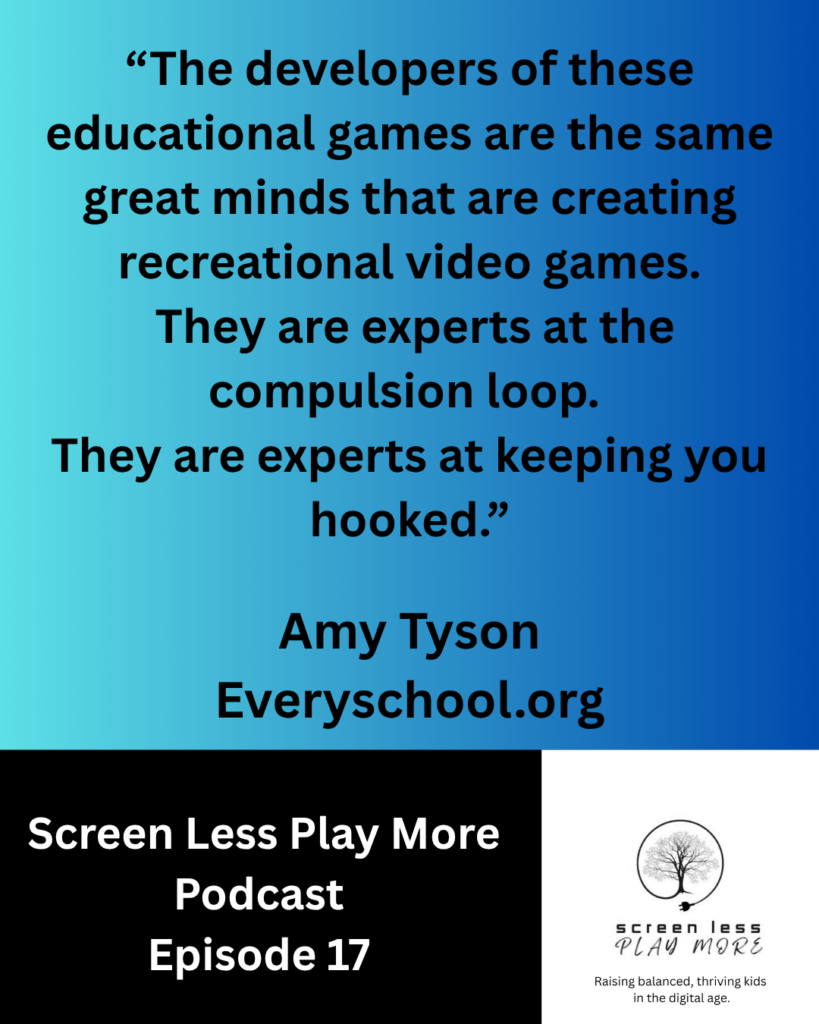
- Educational games are often designed by for-profit companies whose primary goal is to maximize revenue through selling subscriptions. Amy Tyson notes, “On Prodigy, it takes a staggering 888 questions for a student to show a 1-point improvement on a standardized test. Meanwhile, students are inundated with ads for paid upgrades, creating inequity between students whose parents can afford premium memberships and those who cannot.” Source
- Children can often visit unauthorized sites while teachers are not paying attention. My second grader told me just yesterday that he was bored with his math assignment and decided to search on Walmart.com. I’m glad his website choice wasn’t worse.
- If not monitored, the “individualized” EdTech learning can go awry. My son got four grade levels ahead on Lexia, such that it started getting very difficult for him to understand questions about subjects that had never been taught to him. Instead of realizing he was the most advanced in the class, he became frustrated and started feeling dumb.
- Numerous lawsuits and news stories have revealed that EdTech companies sell children’s data. The companies include Renaissance, Google Classroom, and Powerschool.
Education Technology is NOT Technology Education
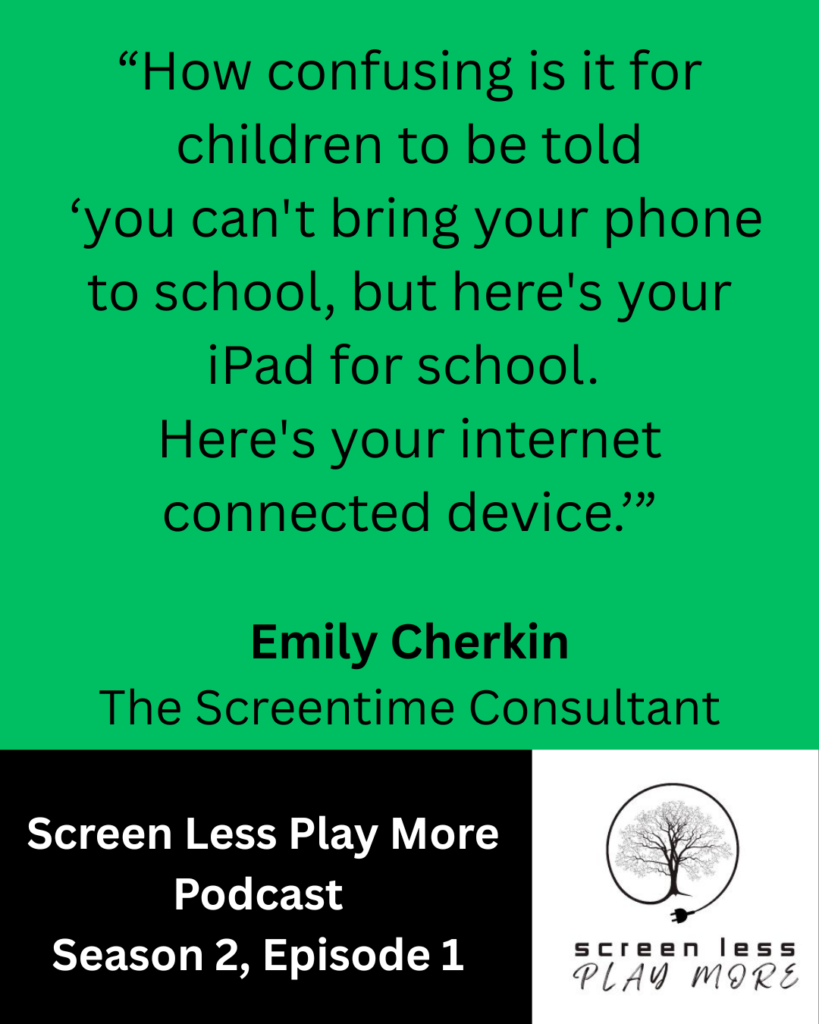
Tech companies push the idea that students will need tech skills to succeed in the 21st century workplace. Although they may need to know how to use computers effectively, this can be learned through computer class in a computer lab.
No employer is going to ask if a student learned how to read via an ipad or a book. The employer will, however, notice if a prospective employee does not have the soft skills necessary to pivot in an ever-changing work environment. These soft skills are most effectively learned through non-screen activities; skills such as resilience, grit, interpersonal communication, attention, critical thinking, collaboration, creativity, and self-control.
EdTech in the classroom may actually be undermining many of these skills.
- Educational games trigger dopamine responses, making it harder for students to focus on less stimulating activities later on. Source and Source
- Many EdTech platforms constantly compete for students’ attention, making deep, sustained focus harder to achieve.
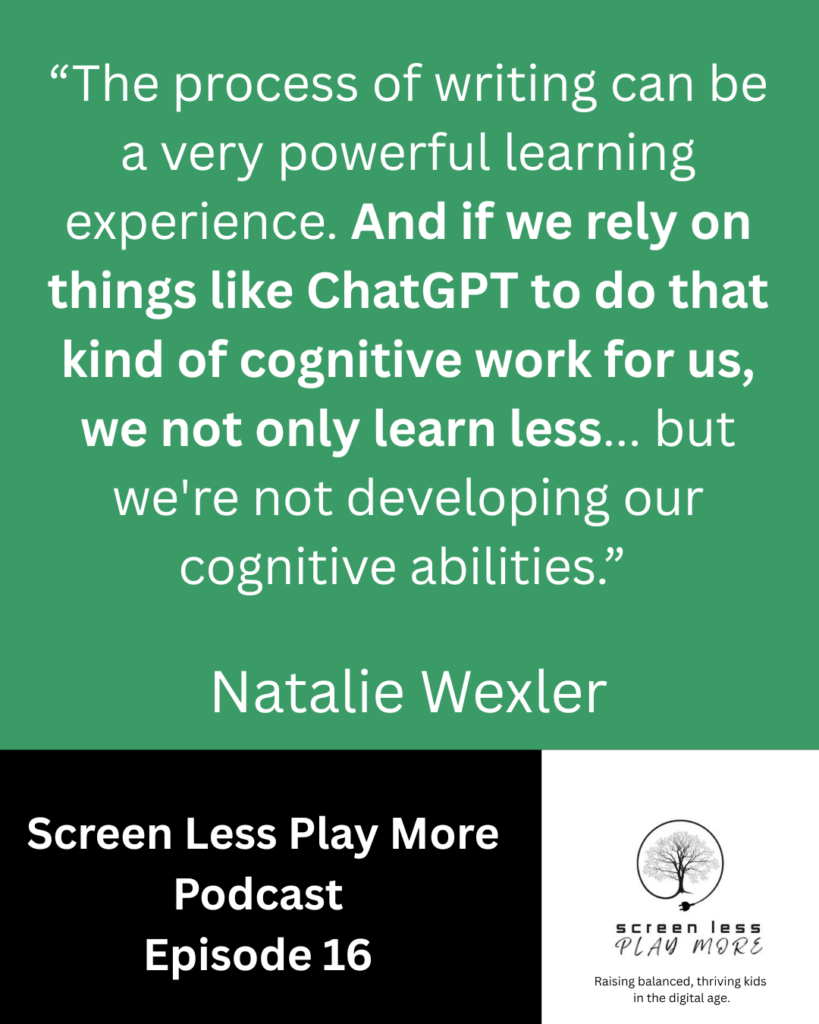
Reliance on generative AI leads to cognitive atrophy. Source
Why do Tech Execs send their Kids to No-Tech schools?
Tech executives send their children to schools without the very EdTech that they push on the rest of the country. What Do They Know That We Don’t?
- Founder and CEO of Meta, Mark Zuckerberg, is running a no-tech Montessori school for his children, out of his home. Meanwhile his company is promoting VR and AI in classrooms across the country. Source and Source and Source
- The chief technology officer of eBay sends his children to a Waldorf school which uses no computers, but instead pens and paper, knitting needles and, occasionally, mud. Source
- Also attending Waldorf schools are children of employees of Google, Apple, Yahoo and Hewlett-Packard. Source
- Microsoft founder, Bill Gates, has admitted “Technology is starting to improve education. Unfortunately so far it is mostly the motivated students who have benefited from it.” Source
Fight For Their Future- Get Rid of Technology in the Classroom
I really don’t want to be forced to opt-out of screens for my children at school. Being the only kid who doesn’t get to play Prodigy or take the quiz online isn’t exactly fun or easy. I don’t relish in my children being the odd man out. So, I sent all of the above research to the director of my sons’ school, and I’m really hoping he implements a low-tech class option.
If it’s bad for my children, then it’s bad for all children.
Cross your fingers. I’ll let you know what the verdict is.
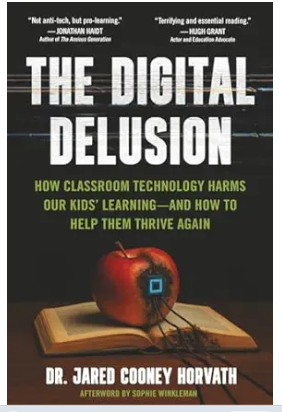
For more information on this subject of EdTech, please check out the INCREDIBLE new book by Jared Cooney Horvath called “The Digital Delusion: How Classroom Technology Harms Our Kids’ Learning- And How To Help Them Thrive Again.” If I could leave it on your front porch I would.
More Fantastic Resources on Screens, Kids, and Brain Development

Thanks for reading about the Dangers of EdTech for Kids and How Parents Can Protect Their Children! We all need to work together to get rid of this crap in classrooms!