Slow shows are vital when you’re trying to be low-tech, because – let’s be real – sometimes you just need twenty minutes to start dinner, read an email, and finally pee alone!
In our house, I try to be very low-screen…But that does not mean completely screen free. As I have said before, not all screens are created equal. There’s a HUGE and important difference between letting your child play Fortnite, and letting them watch Bluey. Similarly, letting your kids play Roblox may actually scar them forever (between pornographic “Easter eggs” hidden in games and the opportunity to chat with predators,) but letting your kids watch some cartoons on Friday afternoon isn’t going to do any harm.
That said, I don’t want my kids watching shows that are going to make them hyper, scare them, shock them, or teach them sassy catchphrases (I’m looking at you Disney Channel!)
So in the spirit of “I just need 20 minutes,” here is a curated list of low-stimulation shows that will entertain kids, occasionally educate them, and not shower them with ads to buy Mr. Beast’s chocolate.
Best Slow Shows For Toddlers
Let me make a quick disclaimer here: if possible in your universe, try to be 100% screen free until your child is 2 years old (unless it’s Facetime with Grandma and Grandpa.) This is not a list of “best shows for babies,” because I don’t believe it’s needed. This same screen time advice is suggested by most pediatricians.
I know this may sound difficult to enact, but my personal experience proves that it’s possible. We used toys, music, and experiences to entertain our babies. When they needed to be contained or distracted, it was always possible to put them in a playpen with some toys, put them in a stroller for a walk, or let them watch us do work from a high chair. (Snacks always help too.)
When your child is in the younger ages from 2-5, the following slow shows are suggested because they are very gentle, low-stimulation, and slow moving. That way, you can keep your child from pulling all of the toilet paper out of the pantry while you’re attempting to do the laundry…and you don’t feel guilty about showing them drivel, (and you don’t have to worry about inappropriate content.)
Slow Shows for Toddlers and Young Kids (ages 2-5)
Classical Baby
Classical Baby is a really lovely series of short, gently animated films created by HBO for babies and young children. Each episode is built around a theme, such as classical music, lullabies, poetry, and visual art. This low-stimulation show uses slow-moving imagery paired with classical pieces from composers like Mozart, Beethoven, or Bach. The art episodes are really amazing, pairing classical music with the modern art of Kandinsky, Mary Cassatt, Picasso, and Renoir. The visuals often include famous paintings or abstract shapes that match the music. There is very little dialogue, which allows children to focus on sound, rhythm, and visual patterns without cognitive overload.
The pacing of Classical Baby is intentionally slow, with long stretches of repetition instead of rapid cuts or loud stimulation. For parents, it can be used as a gentle introduction to classical music and visual art in a way that can soothe rather than overstimulate. It could also serve as a quiet viewing option during rest time or wind-down moments in the day. Parents can find Classical Baby on HBO.
Guess How Much I Love You
Guess How Much I Love You is a gentle, low-stimulation show based on the children’s books by Sam McBratney and illustrated by Anita Jeram. It’s one of the sweetest, most endearing shows that my kids have ever watched. (Known in our house as “the bunny show.”) The animation is reminiscent of watercolor paintings, and the characters are always kind to each other. The British accents make them even more adorable!
The low-stimulation show follows Little Nutbrown Hare and his father, Big Nutbrown Hare, as they explore forests, rivers, meadows, and the changing seasons together. Little Nutbrown Hare’s friends include playful woodland companions like Little Field Mouse, Little Grey Squirrel, Little Redwood Fox, and Little White Owl, who join him on gentle adventures throughout the forest. Their friendships help teach young children about cooperation, empathy, sharing, curiosity, and solving small everyday problems together in a calm and reassuring way.
The beautiful animation, slow storytelling, and quiet music help young children to feel relaxed and engaged. Parents often appreciate that the show encourages imagination, outdoor play, patience, and empathy. Parents can currently find the calming show on Amazon Prime Video, Apple TV, and sometimes Netflix.
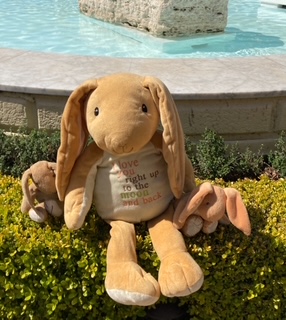
The Little Nutbrown Hare from Guess How Much I Love You, and the books that it’s based on, are a HUGE part of our household. Between my two kids, I think we own at least seven of these stuffed animals. Thus, you can imagine that the Guess How Much I Love You show is a big hit with our household.
Trash Truck (Slow Show Favorite of Little Boys!)
Trash Truck is one of the slow shows that I was happy to let my boys watch when they were tiny, and I just “needed a minute.” This animated Netflix series is created for preschool-aged kids, and follows a little boy named Hank and his best friend, a friendly trash truck. Hank’s close-knit group of friends includes a raccoon, a bear, and a mouse, which gives the show a playful but comforting sense of community. This was definitely a find in our home during the era when my son waited not-so-patiently for the trash truck to come EVERY single Thursday. It was absolutely the best day of his week. (Our son became such a staple on our street that the trash man actually got out of his cab one day and gave my son a coloring book! 🙂
Most episodes of this low-stimulating show feature Hank, out in the neighborhood, on his own without adults. He is allowed time and space to have adventures and imaginative play with his group of animal friends- and of course, his trash truck. He gets the independent play that many of us had in our ’80s and ’90s childhoods!
Trash Truck moves at a calm pace, with soft music, and relaxed storytelling that feels soothing instead of overstimulating. The gentle humor and emotional safety of the show make it appealing for toddlers, preschoolers, and sensitive children who can become overwhelmed by louder entertainment.
Bluey (Slow Show Favorite of EVERYONE!)
No joke, Bluey is my favorite television show of all time. It is the only children’s show that I would actually watch by myself– with no kids around. I’m more than happy to sit and watch it beside my kids. Not only do I laugh with the kids, but I often find myself choking-up. This is the best of the slow shows, the low-stimulation shows, heck… it’s the best of all shows!
Bluey is a beloved Australian animated series about a playful Blue Heeler puppy named Bluey and her family. The show has become a phenomenon because it captures imaginative childhood play in a realistic, funny, and emotionally warm way that resonates with both kids and parents.
Bluey episodes model amazing parenting, emotional intelligence, and imaginative play. Episodes are short, usually under ten minutes, and move at a calmer and more thoughtful pace than many modern kids’ shows. Parents often say that the children’s series inspires them and their children to invent imaginative games, and inspires independent play. Do yourself a favor and watch the episode called “Granny Mobile,” in season 3, episode. You won’t regret it.
Bluey is available on Disney+ and the Disney Channel, along with Youtube.
Mister Rogers Neighborhood (Slow Show Classic)
The holy grail of low stimulation shows for children has to be Mister Rogers Neighborhood. The show ran from 1968 until 2001, which tells you volumes about how popular and beloved it was. Host Fred Rogers speaks directly to viewers, specifically children, about various life topics. The series explores everyday childhood topics like feelings, friendship, fears, conflict, kindness, divorce, anger, and curiosity in a gentle and understandable way. This slow show will definitely not make your kids hyper. Quite the opposite.
Mister Rogers Neighborhood includes music segments, simple demonstrations, and conversations about how things work in the real world. (My son adored the episode about how escalators work.) Most memorable are the visits to factories. Is there anyone who hasn’t seen his visit to the crayon factory?! It’s possibly one of the hilights of my childhood.
A unique part of the show is the “Neighborhood of Make-Believe,” featuring puppets and characters like King Friday XIII, Daniel Tiger, and Lady Elaine Fairchilde. Unlike fast-paced children’s entertainment, the show intentionally uses a slow, peaceful rhythm that encourages reflection, imagination, and emotional regulation.
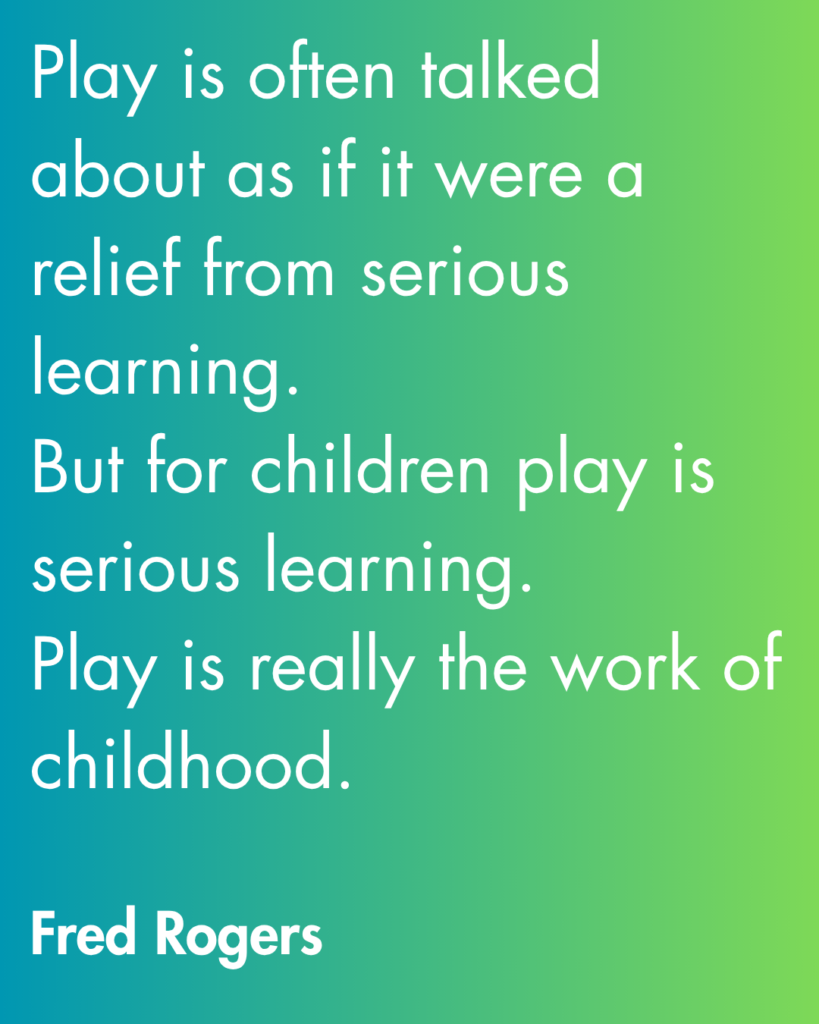
Fred Rogers explicitly felt that his show was the jumping-off point for kids to go play on their own. He didn’t want television to be the end-all be-all entertainment, but a way to inspire children to do their own things with their own imaginations. Listen to his sage words here:
Many educators and parents consider Mister Rogers Neighborhood one of the most influential children’s programs ever made because it supported emotional intelligence, empathy, and healthy child development. The Senate testimony of Fred Rogers may have single-handedly saved PBS and its funding in 1969. Parents can find episodes and clips through PBS Kids and Amazon Prime Video. My next favorite calm show, is a direct descendant from Mister Rogers… Daniel Tiger.
Daniel Tiger’s Neighborhood
The wonderful Daniel Tiger’s Neighborhood is a popular animated children’s television show on PBS, based on the legacy of Mister Rogers’ Neighborhood. The main character, Daniel Tiger, is the young son of Daniel Striped Tiger, a puppet character from Mister Rogers’ Neighborhood.
A wonderfully slow but fun show for kids, Daniel Tiger’s Neighborhood was created to carry forward many of the values and lessons that Fred Rogers shared with children. Like Mister Rogers, the slower show focuses on kindness, empathy, friendship, and emotional development. Each episode teaches toddlers practical life skills through simple stories and memorable songs. The songs were a FAVORITE in our house when my kids were preschoolers. I can still recite the songs about going potty, sharing with others, knowing when it’s time to go home, or trying a new food “because it might taste good!” (You can enjoy the song below.)
Through the songs and storylines of Daniel Tiger, children learn how to manage feelings such as anger, disappointment, sadness, and excitement. The show’s gentle pace gives young viewers time to process information and follow along comfortably.
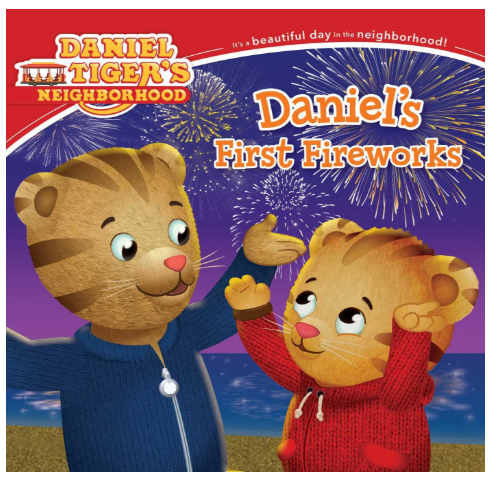
We appreciated this slow show when my children were small because it was a wonderful way to introduce them to new experiences before they happened; such as getting a shot at the doctor, hearing fireworks on 4th of July, or getting a new baby in the family. There are also Daniel Tiger books, based on the show, that discuss single topics, such as “Daniel Learns to Ride a Bike,” or “Let’s Brush Our Teeth!”
Tumble Leaf
Tumble Leaf is a charming slow show on Amazon Prime Video that combines imagination, adventure, and lots of understandable science concepts. The show follows a curious blue fox named Fig, who lives with his pals on a magical island called Tumble Leaf. Each episode begins when Fig discovers a special object in a seashell known as the Finding Place. These objects inspire new adventures and encourage children to think creatively.
The enchanting claymation world of Tumble Leaf feels magical because everyday items often lead to surprising discoveries. The colorful landscapes, whimsical characters, and imaginative settings create a sense of wonder. This slow show for children encourages children to see the extraordinary possibilities hidden within ordinary objects. Fig and his friends approach problems with excitement and optimism.
Many episodes of Tumble Leaf focus on scientific thinking and discovery-based learning. Children and toddlers are introduced to concepts such as gravity, balance, buoyancy, motion, and simple engineering. The educational lessons are woven naturally into the story rather than presented as formal instruction. Viewers are encouraged to make observations, ask questions, and test ideas alongside the characters.
The gentle pacing gives children time to understand concepts and follow the reasoning process. Tumble Leaf also teaches perseverance by showing characters working through challenges step by step. In our house, we love how Fig often remarks, “twist and shout, I figured it out!”
Not A Box (One of the newer slow shows available)
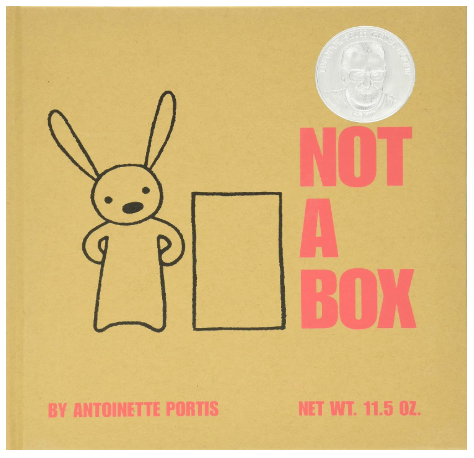
Slow but mighty, Not a Box is an animated children’s series based on the popular picture book by Antoinette Portis. (The book is adorable as well. Read about it, and other books that inspire imagination here.)The 2025 show follows Riley Rabbit, whose imagination transforms ordinary cardboard boxes into extraordinary adventures. Each episode demonstrates how creativity can turn simple objects into anything a child can imagine.
My favorite part about Not A Box is that it encourages children and toddlers to use their own imagination rather than relying solely on toys or screens for entertainment. The calming show promotes creative thinking, problem-solving, and self-expression through imaginative play.
Mighty Machines
Kids who love trucks, machines, and tractors will ADORE Mighty Machines. This is a live-action, educational children’s series that shows real construction, transportation, and industrial machines at work. It premiered in 1994, but ran all the way until 2008.
One of the biggest educational benefits is that it helps kids understand how large machines function in real-world environments. Each episode of Mighty Machines gives children a simple, step-by-step look at how complex systems like airports, construction sites, and rail yards operate. My son’s favorite part was how the machines are often given voices and personalities, which makes learning feel fun and imaginative instead of like a lecture.
The calm narration and steady pacing help viewers focus on details without feeling rushed or overwhelmed. Low stimulation show Mighty Machines can be watched for free on some streaming platforms, including ad-supported services such as Fawesome, and Youtube.
Sesame Street (The OG Slow Show)
Duh. Of course Sesame Street has to be on a list of educational, low-stimulation, slow shows for kids. It’s the granddaddy of them all, started by Jim Henson in 1969 to provide high-quality programming for young children. Its founders wanted to use the power of television to prepare children for success in school.
The low-stimulation children’s show features what used to be a unique blend of human actors, puppets, animation, music, and storytelling….but has now become a mainstay of children’s programming, thanks to Sesame Street. (And don’t forget all of the celebrity cameos!) Many of its most famous characters, including Elmo, Big Bird, Cookie Monster, Bert, Ernie, and Oscar the Grouch, have become cultural icons.
Interestingly, as children’s television became faster and more visually intense in the 1990s and early 2000s, Sesame Street producers reevaluated how young children were processing the show.
In 1998, the introduction of “Elmo’s World” brought a slower, more repetitive format that was designed especially for younger viewers. By 2002, Sesame Street significantly restructured the program, moving away from its older magazine-style format toward longer and more focused story segments. The goal was to make the show easier for toddlers to follow and to avoid overwhelming them with constant rapid changes and interruptions. Rather than competing with the fast-cut style often associated with channels like MTV, the producers increasingly emphasized clearer storytelling, repetition, and age-appropriate pacing to support learning and comprehension. Thus, if you’re going to show your kids some old episodes, I would steer away from the ones in the early 1990s.
Much like fellow slow-show original Mr. Roger’s Neighborhood, Sesame Street addresses important topics such as friendship, family relationships, health, race, disability, and community involvement. More than fifty years after its debut, Sesame Street remains a trusted educational resource for families around the world. You can find it on PBS, Netflix, and HBO.
Best Slow Shows For Kids (Ages 6-10)
Slow Shows can be a life-saver for the occasional times when you can’t do your usual play routines or outdoor activities (i.e. sick days, blizzards, long plane rides, hotel rooms where the kids are attempting to break everything in sight.) As you know, I opt for real life experiences over TV as often as possible…. but let’s not lie….sometimes you just don’t have the bandwidth to breakup the fights, supervise the risky play, or hear one more second of “six seven!”
Please note, if you need to use a screen to occupy the kids for a few minutes, please consider these slower-paced, educational, high-quality shows. Of course nobody is going to fail out of college because they watched fast-paced shows like Sponge Bob, but they might have lasting damage if they’re allowed to roam free on the internet. PLEASE keep your kiddos away from the dangers of predators, pornography, and addiction that can occur with many video games, online apps, and social media platforms. (NO ROBLOX! For real.) Stick to the tried-and-true television that has been around since our grandparents told our parents that they were rotting their brains.
Reading Rainbow (The classic version)
A list of slow shows for kids absolutely must include Reading Rainbow. I’m talking about the older version here, from the 80s, which you can find on YouTube. This classic, hosted by LeVar Burton is widely regarded as one of the greatest educational television programs ever created because it inspires children to develop a genuine love of reading. (It also has amazing behind-the-scenes footage of factories and businesses, much like Sesame Street and Mr. Rogers.) This clip is my son’s favorite because it shows how bowling balls are made.
Aside from LeVar Burton introducing kids to new places, there is a reading of a book on each episode, and reviews of books by actual kids. You could probably convince your kids to make their own reviews (whether you record them or not.)
The idea of Reading Rainbow was resurrected in 2025 with host Mychal Threets, a librarian who went viral on TikTok for sharing fun stories of “library joy.” This show is a fabulous choice compared to much of the slop that is out there…but I can’t call it a “show show.” I suppose it’s trying to keep up with the pace of modern day media, but this new version is much faster paced than any of the other suggestions on this list.
How It’s Made
If you have kids who enjoy finding out how things are made in factories, How It’s Made will be their jam. (And with 32 seasons, you’ll have enough episodes to last a lifetime. )
How It’s Made is a fascinating documentary series that shows how everyday products are manufactured.
Each episode takes viewers inside factories, workshops, and production facilities around the world.
The show explains how common items such as bicycles, crayons, cereal, musical instruments, and sports equipment are made. Its clear narration and step-by-step demonstrations make complex processes easy to understand. Many children enjoy the slow-paced show because it answers questions they naturally ask about how things work. The series introduces children to science, engineering, technology, and manufacturing in a fun and accessible way.
Unlike many modern programs, the show has a calm and predictable pace that allows viewers to focus on the details. Kids often find it satisfying to watch machines, assembly lines, and skilled workers create products from start to finish.
How It’s Made is available on platforms including Hulu, Max, Discovery+, Disney+, Plex, and some free ad-supported services, although the number of available seasons varies by platform.
The Magic School Bus (Best Calm Show about Science)
I can’t tell you how many times my son has told me a fact about science and when I asked “where did you learn that,” his reply was, “Magic Schoolbus.” The show is incredibly educational, while still being fun and funny. I have absolutely learned new things by watching with my kids.
The older PBS version of Magic School Bus from 1994 features Lily Tomlin as the voice of Ms. Frizzle. The newer version from 2017 is called The Magic School Bus Rides Again. The new series introduces Fiona Frizzle, the younger sister of the original Ms. Frizzle, voiced by Kate McKinnon of “SNL” and “Barbie” fame.
The shows are based on a popular book series, and explore physics, chemistry, geology, biology, and imaginative adventures. In each episode, the class of Ms. Frizzle travels through time and space to get a hands-on science lesson. Adventures take them to the bottom of the ocean, the interior of a volcano, the insides of an electron, and the cells of a human body. (And more!) I would say the shows are equally excellent. Both Magic School Bus versions are slower-paced and inspire young viewers to ask questions, explore the world, and never be afraid to “take chances, make mistakes, and get messy.”
Xavier Riddle and the Secret Museum (Best Calm Show About History)
As a former history major, I particularly enjoy this PBS show, which is more moderately-paced than most. Xavier Riddle and the Secret Museum is an educational children’s series that teaches history through storytelling and adventure. The show follows three kids as they travel to the Secret Museum to meet historical figures from the past.
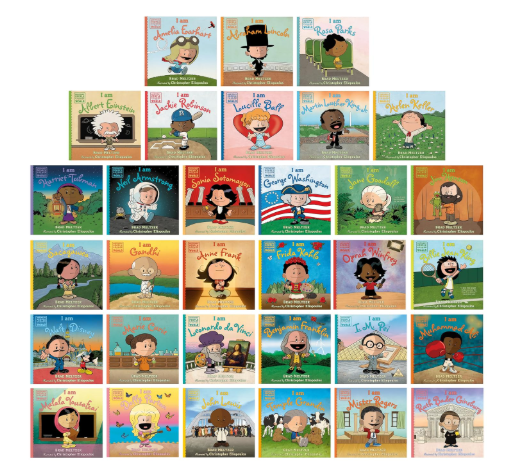
Each episode of Xavier Riddle and the Secret Museum introduces real people from history who overcame challenges and made important contributions to the world. Episodes celebrate the trials and triumphs of historical figures such as Helen Keller, Jackie Robinson, Rosa Parks, Amelia Earhart, and Abraham Lincoln.
History can be difficult to explain to children, due to the many tragic and violent events. This show however, does a good job of keeping the stories accurate but age-appropriate. The series is based on the “Ordinary People Change the World” book series by Brad Meltzer, which focuses on real-life heroes. The calm pacing and clear narration make it suitable for early elementary-aged children who are just beginning to learn about history. Through its inspiring stories and educational approach, Xavier Riddle helps children understand that even ordinary people can make a meaningful difference in the world.
Mighty Trains (Best Slow show for Train Lovers)
If you have a train lover out there, Mighty Trains is a much better choice than Thomas. (Or a choice when your railroad fan has outgrown Thomas the Tank Engine.) Mighty Trains is a documentary series that many older kids enjoy because it shows real trains in action across different countries and landscapes. (I’m not a huge fan of Thomas because the trains are quite rude to each other.)
The slow show is a travelogue that focuses on powerful locomotives and explains how they operate in clear, interesting detail. Each episode explores famous trains such as The Rocky Mountaineer, Maharajas Express, Death Railway, and others. The cinematography highlights beautiful scenery, which adds a travel and geography element to the learning experience. Kids and adults can learn how trains are built, maintained, and controlled, which introduces basic engineering and physics concepts. The narration is calm and informative, making it easy to follow without feeling rushed or childish.
We had to buy episodes from Amazon when we watched 4 years ago, but they now appear to be free on Youtube.
Bob Ross Joy of Painting (Best Slow Show for Art Lovers!)
Talk about chill! Bob Ross is the epitome of calm. Bob Ross’s painting series, The Joy of Painting, features Bob Ross guiding viewers step-by-step through landscape painting in a gentle and encouraging way. The slow pace of the show allows children to actually watch each brushstroke and understand how a painting is built from start to finish. Unlike modern programs, the quiet tone and soft narration create a relaxing atmosphere that can help kids unwind.
Kids often like the show because there is no pressure to be perfect, and Bob Ross frequently reminds viewers that “there are no mistakes, only happy accidents.” It’s extremely slow, in the best way, so your kid will either be completely mesmerized (like my oldest) or absolutely bored to tears (like my youngest.)
Joy of Painting originally aired on public television in 1983, and had an astounding 33 seasons! It is now widely available on streaming platforms such as YouTube, Netflix (in some regions), and The Roku Channel.
Numberblocks (Best Slow Show about Counting and Math)
Numberblocks is a British animated series designed to teach early math concepts to young children in a fun and visual way. The educational kids show follows colorful block characters who represent numbers and change shape depending on how they combine or split apart. Each character is literally built from smaller blocks, which helps children see how numbers are constructed.
This could be a good show for a preschooler who is learning to count. However, I put it in the section for older kids because a lot of the episodes focus on adding, subtraction and multiplication. It’s a great way for kids to visualize math, especially if they have trouble with numbers, like kids with dysnumeria.
The pacing is gentle and repetitive, which supports learning and reinforces key ideas without overwhelming viewers. The colors and music help math seem playful and engaging rather than a lesson. Available on Netflix and Youtube. (Just remember it’s Numberblocks , not Number Blocks.)

Slow Show Honorable Mention
Ask The Storybots
Ask The StoryBots is a super fun and educational children’s series that answers big questions kids often ask about the world. How does the body work? Why does night happen? How do we hear?
I’m putting it as an honorable mention because it’s not as slow as I would like…but it’s incredibly educational while being incredibly fun.
The show follows the StoryBots, tiny colorful characters who travel around learning and explaining how things work. Each episode focuses on a different big question, and does an incredibly great job of explaining big topics. I have learned a lot myself by watching with my boys!
The show uses catchy songs and visual storytelling to help children remember important facts and concepts. Famous people like John Legend, Snoop Dogg, and Zoe Saldana have appeared to help explain topics in entertaining ways. The characters often break the fourth wall, speaking directly to viewers to keep them engaged. Ask The StoryBots originally premiered on Netflix, where most of its episodes and specials can still be watched today.
The beauty of Slow Shows
If you are looking for a slower show or a low-stimulation TV show for kids, this is the list for you. Even if you keep your household low-tech, sometimes you just need a moment to accomplish something without chaos. These low-stimulation, slow shows can let you get a few minutes of peace without feeling guilty!

Thanks for reading the Screen Less Play More guide to slow shows for toddlers and kids! Visit my Substack for more tips on parenting in the digital age.